25 July 2026
What Is a Kampung? And Why We Don't Call It a Slum
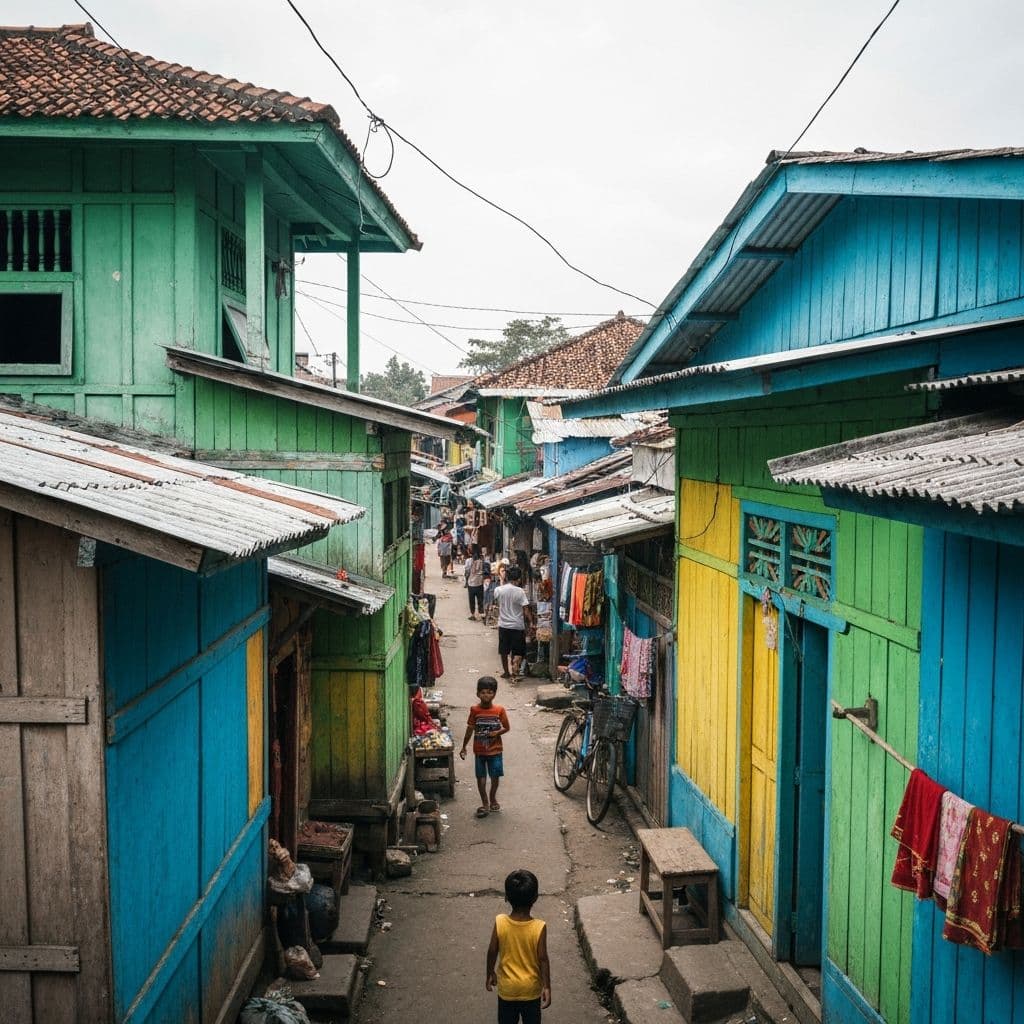
If you're researching Jakarta or our work at Future Kampung, you'll quickly come across the word "kampung". For many Western readers, that conjures an image of a slum — a makeshift, temporary settlement. That picture isn't accurate, and it does a disservice to the communities we work with.
What does kampung literally mean?
Kampung is Indonesian/Malay for "village" or "neighborhood". In cities like Jakarta, the word refers to densely populated, informally grown residential areas that have often existed for generations — sometimes predating the city itself. A kampung isn't a temporary camp; it's a lasting community with its own streets, small shops, mosques or churches, and a strong social network.
Why isn't "slum" the right translation?
The word slum suggests decay and a lack of organization. The reality in many kampungs is different: residents know each other, support each other, and often have a functioning, if informal, social structure. What is frequently missing is access to formal services — sewage systems, reliable drinking water, and for children: quality education and healthcare. That's exactly where the challenge lies, and where Future Kampung focuses its work.
Why does Future Kampung work in kampungs specifically?
Kampungs are home to millions of Jakartans — including the families and children we support through education, emergency aid, and empowerment. By working from within a kampung's existing social structure, rather than replacing it, our projects build on what's already there: close-knit communities that need surprisingly little to make a big difference for their children.
How many people live in a kampung?
Jakarta has hundreds of kampungs, ranging from small neighborhoods of a few hundred residents to densely populated areas with tens of thousands of people. Together, they make up a significant share of the city — estimates vary, but a large portion of Jakartans live in some form of kampung. It's not a marginal phenomenon; it's a structural part of how the city is built.
Support our work
Every donation goes directly to projects in Jakarta. ANBI certified — your donation is tax deductible in the Netherlands.
Donate now